Blog Posts

The Copy-Paste Crisis: When Brands Can Fake You for Free

The Copy-Paste Crisis: When Brands Can Fake You for Free

As a creator, your identity is everything. Your voice. Your face. Your personal brand. It's what makes you valuable. It's what brands pay for. But what if someone could just steal it? Welcome to the copy-paste crisis that's threatening every influencer, content creator, and digital personality online. Three Seconds Is All They Need Here's the terrifying reality: AI needs just three seconds of audio to create a perfect clone of your voice. Not a rough approximation. Not an obvious fake. A perfect clone that sounds exactly like you, with your inflections, your mannerisms, your unique speaking style. And these deepfake tools? They're cheap. They're easy to use. They're available to anyone with an internet connection. This creates a massive problem: Why would a brand pay you when they can fake you for free? The MrBeast TikTok Scam This isn't some hypothetical future threat. It's happening right now to the biggest names in the creator economy. A recent TikTok ad used a deepfake of MrBeast to promote a massive giveaway scam. The fake was so convincing it included: His exact voice and speaking style His logo and branding A fake blue check mark for credibility Millions saw it. Thousands fell for it. And it wasn't even created by a sophisticated operation — it was made with readily available AI tools. This proves platform verification isn't enough anymore. Blue checks can be faked. Logos can be stolen. But cryptographic signatures? Those can't be replicated. Why This Threatens Your Business As a creator, you face a three-pronged attack: Scammers using your identity to defraud your fans Brands potentially stealing your likeness instead of paying you Your audience losing trust because they can't tell what's real Your entire business model depends on authenticity. On your fans trusting that they're actually hearing from you. On brands knowing they're getting the real you. Deepfakes destroy all of that. Fighting Back: Proving You're the Real You The solution isn't to fight the technology. You can't stop AI from getting better at cloning voices and faces. That battle is already lost. The solution is to prove you're the real you. Meet not.bot — a simple, powerful tool to protect your digital identity. Think of it as a digital autograph for your content. How It Works Add a unique not.bot sticker — A scannable QR code that serves as your digital signature Attach it to your videos — Place it directly on your content, just like a watermark Your followers verify instantly — They scan the sticker with their phone to confirm it's actually you If a video doesn't have your signature, your community knows right away it's a fake. Teaching Your Audience a New Rule This creates a simple, powerful protocol that's easy for your followers to understand: No signature, not real. You're training your audience to demand proof. To verify before they trust. To protect themselves from scams and you from impersonation. Privacy at the Core Here's the critical part: the verification is built with privacy at its foundation. Your data is stored on your device so it can't be hacked, leaked, or sold. You maintain full control over your identity while proving it's actually you. Stop Scams Before They Go Viral The old playbook was reactive: spot the fake, issue a statement, try to get it taken down. But by then, millions had already seen it. The new playbook is proactive: sign everything that's actually you, and teach your audience to ignore everything else. This stops scams before they can even go viral. It protects your brand and your audience simultaneously. Take Back Control Your identity is your business. Your brand is your livelihood. Don't let AI copycats steal what you've built. It's time to take back control. Visit not.bot to create your digital signature and protect your identity. Watch on YouTube: The Deepfake Crisis for Creators

Deepfake Blindness: Why Your Fans Can't Tell What's Real Anymore

Deepfake Blindness: Why Your Fans Can't Tell What's Real Anymore

Your face is being stolen. Right now. And your fans have no idea it's happening. Scammers are using AI to create deepfakes of celebrities, putting words in their mouths and using their trusted images to sell fake products, promote scams, and damage reputations built over decades. Take Oprah. Scammers used deepfakes of her to sell fake diet pills to her loyal fans, charging over $300 for products she never endorsed. Her fans trusted what they saw — because why wouldn't they? It looked like Oprah. It sounded like Oprah. It had her mannerisms, her voice, her face. And Scarlett Johansson? Her face was used in deepfakes to put words directly in her mouth, creating content she never approved and endorsing products she's never heard of. The Old Playbook Doesn't Work Anymore The traditional response is to chase down and deny every single fake video that pops up. You issue statements. You file takedown requests. You try to get ahead of the misinformation. But let's be real: that's a losing game. By the time you deny it, millions have already seen the lie. The damage is done. The fake has gone viral. And your denial? That gets a fraction of the attention the original deepfake received. Deepfake Blindness: The Real Problem Here's the bigger issue, the one we really need to talk about: your fans can't tell the difference anymore. It's called "deepfake blindness," and it's a real, documented phenomenon. We're wired to believe what we see. Our brains haven't evolved to question video evidence. Your fans genuinely think they can spot a fake, but the data shows they just can't. The technology has gotten too good. The fakes are too convincing. And they're getting better every day. A New Playbook: Proactive Authentication It's time for a new approach. Instead of playing defense, it's time to go on offense. Think of it like a digital autograph. not.bot provides a simple, powerful way to prove your content is actually yours. It's like a blue check that actually works — a signature you put directly on your videos that can't be faked or replicated. Here's how it works: Get your unique sticker — A digital signature that only you can create Make your video — Create content exactly as you always have Add the sticker — Attach your not.bot signature to the video Your fans verify instantly — They know it's real because it has your signature Teaching Your Audience a New Rule This creates a simple, powerful rule that's easy for your audience to understand and remember: If it's not signed, it's not me. Think about what this does. If a video of you pops up without your sticker, your fans know immediately it's a fake. No detective work required. No trying to spot subtle AI artifacts. Just a simple check: signature or no signature? The Shift: From Confusion to Clarity This is the fundamental shift in strategy: Before: Confusion and viral lies that you have to chase down After: Clarity and instant trust, with fakes stopped before they go viral You're not fighting the technology. You're not trying to win an arms race against AI. You're simply proving which content is actually yours. Protect Your Reputation, Protect Your Fans Your fans trust you. They've followed your career, bought your products, supported your work. They deserve to know when they're actually hearing from you. Deepfakes aren't just an attack on your reputation. They're an attack on the relationship you've built with your audience. They exploit the trust your fans have in you to scam them, deceive them, and profit from your name. It's time to fight back. Get started with not.bot today. Protect your reputation. Protect your fans. Prove what's real. Visit not.bot to create your digital signature. Watch on YouTube: Deepfake Blindness

The End of Catfishing: A Love Letter from a Retired Scammer

The End of Catfishing: A Love Letter from a Retired Scammer

It's over, guys. The golden age of catfishing? Dead. Gone. Kaput. I used to be a handsome doctor on a peacekeeping mission. I used to be a stranded prince needing a wire transfer. I once convinced someone I was their high school sweetheart (we'd "both changed so much!"). But now? I can't trick anyone. And do you know who's to blame? not.bot. The Good Old Days (When Nobody Knew You Were a Dog) Before, on the internet, nobody knew you were a dog, a bot, or a guy named Sammy in his mom's basement. It was beautiful. It was simple. It was profitable. "Hello, beautiful. I'm stuck at the airport and need help with my luggage fees." "I'm a military commander stationed overseas. We're not allowed to access our bank accounts." "I'm a successful entrepreneur, but my accounts are temporarily frozen due to a business deal." These lines were poetry. And they worked. Then not.bot Ruined Everything Real people — apparently that's most of you — started using this app to prove they're actually human. They scan their passport to verify they exist. They create a unique digital signature that can't be faked. And the worst part? Julia Social, the company behind it, doesn't even keep your data. They use some fancy cryptographic math so they can't see it, lose it, or sell it. (Believe me, I checked. I was hoping to buy a database. No luck.) My Last Failed Attempt Yesterday, I tried my classic move. Sliding into someone's DMs with my usual "Hello, beautiful. I'm stuck at the airport" routine. You know what I got back? "Can you send me your not.bot sticker?" I can't fake it. It's not like I have a passport that says "Doctor Handsome" or "Prince of Nigeria." The verification actually checks government records. If I can't prove I'm a human with a real identity, my entire business model is ruined. I might have to get a real job. How This Actually Works (Unfortunately) Here's what's destroying my livelihood: Real humans verify their identity once — They scan an actual government ID They create a unique digital signature — A scannable QR code that proves their identity They share it when meeting new people online — On dating apps, social media, anywhere trust matters People can verify instantly — Scan the code, confirm the person is real No sticker? Probably a scammer. (That would be me.) The Privacy Thing (That Really Annoys Me) The thing that really gets me is the privacy protection. Julia Social doesn't have access to your personal data so it can't be hacked or leaked. Your information is stored on your device. I used to count on companies having terrible security. Data breaches were my friend. Not anymore. A Farewell to Arms (and Scams) So here we are. The end of an era. If you want to: Protect your identity online Stop catfishing in its tracks Prove you aren't a robot (or a guy named Sammy) Actually trust who you're talking to Then go ahead. Visit not.bot. Ruin my life. See if I care. (I care a lot. Please don't. I have a cat to feed.) Editor's Note: While this article is satirical, the threat of catfishing and online romance scams is very real. According to the FTC, Americans lost over $1.3 billion to romance scams in 2023. Digital identity verification tools like not.bot provide a simple way to verify you're talking to a real person, not a scammer. Video Watch on YouTube: Catfishing is OVER

The Authenticity Crisis: Why We're Asking the Wrong Question About AI

The Authenticity Crisis: Why We're Asking the Wrong Question About AI

What if we've been looking at the whole AI problem wrong? You've probably asked yourself: "Is this AI-generated?" As deepfakes flood our feeds and generative AI becomes indistinguishable from reality, it feels like the most important question we can ask. But here's the thing — that's actually the wrong question. We're in the middle of a massive authenticity crisis, and yes, generative AI is a big part of it. We're obsessed with spotting the AI, playing digital detective with every image, video, and voice we encounter. But the real problem isn't the tool itself. The real problem is a lack of accountability. Think about it: a fake can be made in Photoshop just as easily as with AI. The tool doesn't matter. What matters is knowing who is actually behind the content. Who takes responsibility for this message? Who stands behind these words? The Solution: Verify Humans, Not Content There's a clever new approach to this problem, and it comes from not.bot. Instead of trying to detect AI (a game you simply can't win), not.bot proves one simple thing: a human took responsibility for this message. Think of it like a digital autograph — a sticker that proves a real person signed off on the content. The whole process is incredibly simple: Verify you're human Create your unique sticker Attach it to your content And here's the critical part: the entire system is built around protecting your privacy. As the CEO explained, "We can't lose your data in a hack because we don't have it." Your personal information stays on your device, never stored on external servers. Where Does This Work? The short answer: everywhere online. The not.bot digital signature works with the internet you already use: On TikTok, X, and social media — Fight deepfakes by signing your own video content On dating apps — Stop catfishing by asking for proof you're talking to a real human In business communications — Verify that messages actually come from who they claim to be Rebuilding Trust Online The solution isn't to fight AI. The solution is to verify the humans. We can't win an arms race against increasingly sophisticated AI tools. But we can create a simple, elegant system where accountability matters more than detection. Where authenticity is proven, not guessed at. The question isn't "Is this AI?" The question is "Who stands behind this?" Ready to prove you're human? Visit not.bot to learn more. Video Watch on YouTube: AI vs Authenticity

Ken Griggs on Ash Said It: The Future of Digital Identity

Ken Griggs on Ash Said It: The Future of Digital Identity

Our CEO Ken Griggs recently joined Ash Brown on the Ash Said It Show for a timely conversation about digital identity, privacy, and the UK's proposed nationwide digital ID system. Here's what you need to know. The Big Question: Security or Surveillance? When the UK government announced plans for a nationwide digital ID system, it sparked a global debate about the future of digital rights. On the surface, these systems promise convenience—easier access to public services, streamlined verification, reduced fraud. But as Ken explains in this eye-opening interview, the reality is far more complex. "When you centralize the identity of an entire nation in a single database, you're creating a high-risk honey pot for hackers and state actors," Ken warns. "It's not a question of if it gets breached—it's when." Why Centralization Is Dangerous During the 16-minute conversation, Ken breaks down three critical problems with centralized digital ID systems: 1. Single Point of Failure When millions of identities live in one database, a single breach compromises everyone. We've seen this play out with massive data breaches at Equifax, Target, and countless other centralized systems. Now imagine that, but with your government-issued identity. 2. Surveillance Potential Centralized systems give governments unprecedented tracking capabilities. Every time you verify your identity, that action can be logged, tracked, and analyzed. This creates a detailed map of your daily life—where you go, what services you use, who you interact with. 3. Loss of Data Sovereignty In centralized systems, you don't own your data—the institution does. You can't delete it. You can't control who sees it. You're entirely dependent on that institution to protect it, manage it, and not misuse it. The Decentralized Alternative This is where Ken's work at not.bot and Julia Social comes in. As he explains to Ash, there's a better way: You own your identity. You control your data. You choose when and how to share it. Instead of storing everyone's information in a centralized database, decentralized identity uses cryptographic proofs. Your identity information lives on your device. When you need to verify yourself, you create a cryptographic signature that proves who you are—without revealing any underlying data. It's the difference between showing your entire driver's license to prove you're over 21, versus simply proving the fact that you're over 21 without revealing your name, address, or photo. Why This Conversation Matters Now The UK's digital ID legislation is being watched worldwide. If they implement a centralized system, other countries will follow. If they adopt a decentralized, privacy-preserving approach, it could set a new standard for digital rights globally. As Ken tells Ash: "The choices we make about digital identity today will determine what privacy looks like for the next generation. We can't afford to get this wrong." Watch the Full Episode The full conversation covers much more, including: How blockchain technology enables decentralized identity Why "convenience vs. privacy" is a false choice Practical steps you can take to protect your digital identity today The role of not.bot in the future of digital verification Watch now: Ash Said It Show - Episode 2150 About the Ash Said It Show The Ash Said It Show is a top-ranked podcast with over 2,100 episodes and 700,000+ global listens. Host Ash Brown brings her signature "Authentic Optimism" to conversations with changemakers across all industries, delivering uplifting energy and actionable strategies for personal and professional growth. Learn more at AshSaidit.com

Safe Spaces Need Verification: Why We're Attending AI Festivus 2025

Safe Spaces Need Verification: Why We're Attending AI Festivus 2025

The Problem We're Gathering to Solve This week, we're joining hundreds of AI practitioners, technologists, and community leaders at AI Festivus 2025—a two-day virtual event celebrating human-centered AI. And true to the Festivus tradition, we're bringing some grievances to air. Grievance #1: Online communities can't protect safe spaces. In 2024 alone, catfishing cost people $697 million. Twenty-three percent of social media users report being victimized. And it's getting worse—AI-generated deepfakes are making every photo, every video, every voice call suspect. The technology to fake identity is advancing faster than our ability to detect it. But the statistics only tell part of the story. When Safety Costs Privacy The problem hits women's communities especially hard. Online groups for women face constant harassment from bad actors who raid their spaces with lewd comments, degrading behavior, and coordinated attacks. It's exhausting. It's demoralizing. And current solutions force an impossible choice: Sacrifice privacy for safety, or risk your community being overrun. Communities like She Leads AI need ways to verify that members belong without compromising anyone's personal information. Right now, the tools available force difficult security decisions that some members may not be comfortable with. Share your face. Share your real name. Give up your anonymity. There has to be a better way. The Detection Dead End "Just use AI detection tools," people say. Here's the problem with that advice: detection is a losing game. AI detection tools fail on sophisticated deepfakes. They can't verify video calls in real-time. And every time detection improves, the fakes get better. You're stuck in an endless arms race, always one step behind, always reacting instead of preventing. The fundamental flaw is in the question itself. Instead of asking "Is this fake?" we should be asking "Can you prove you're real?" Verification, Not Detection What if you could prove you're female without revealing your face, name, or any other identifying information? What if communities could verify who belongs without compromising anyone's privacy? Privacy AND safety. Together. Not a trade-off. That's cryptographic verification. And it's what we're building at not.bot. Why Mathematical Proof Beats AI Guessing At its core, cryptographic verification provides mathematical certainty, not probabilistic guesses. When you create a digital signature with not.bot, you're generating cryptographic proof of your identity attributes—proof that can be verified without revealing your personal information. Think of it as a digital autograph that only you can create, but anyone can verify. No AI detection algorithms. No reverse image searches. No guessing games. Just mathematical proof that works every single time. The technology exists. The standards exist. What's been missing is the application layer—making cryptographic verification accessible, understandable, and practical for everyday online interactions. Human-Centered AI Requires Human Verification AI Festivus champions human-centered AI—artificial intelligence that serves humanity rather than replacing or deceiving it. It's a mission we deeply believe in. But here's the thing: human-centered AI requires human verification. If we can't prove who's human and who's AI, how can we build AI systems that truly serve people? If anyone can impersonate anyone, how do we create online spaces where authentic human connection can flourish? The answer isn't more sophisticated detection. It's giving people the tools to prove their authenticity when it matters. Join the Conversation This week at AI Festivus, we're joining conversations about digital identity, online safety, and the future of human-centered AI. We'll be discussing how cryptographic verification can protect safe spaces, enable authentic connections, and shift the paradigm from defensive detection to proactive proof. The event is free and virtual, running December 26-27 with 34 speakers across 24 hours of workshops. Whether you're building AI tools, managing online communities, or simply concerned about digital trust, there's space for your voice. The most powerful question we can ask isn't "Is this fake?" It's "Can you prove you're real?" And we finally have the technology to answer it. About AI Festivus 2025 Dates: December 26-27, 2025 Format: Virtual (FREE) Organizers: She Leads AI + AI Salon Theme: Human-centered AI - mindset, use cases, discoveries, artistry, collaboration, and "airing of grievances" Register: aifestivus.com About not.bot not.bot provides cryptographic digital signatures that prove human authenticity without AI detection. Our mobile app lets you create verifiable "digital autographs"—QR and JAB codes that serve as mathematical proof you're a real person. Learn more at not.bot.

Deepfakes, AI, and the "Truth" – A Conversation with Ken Griggs

Deepfakes, AI, and the "Truth" – A Conversation with Ken Griggs

How do you verify what’s real in an age of AI? It is one of the most pressing questions of our decade. To find the answer, The C-SUITE EDGE invited Ken Griggs (CEO of Julia Social) to the mic. In a fascinating discussion on the evolution of technology, they dive deep into the mechanics of "digital trust" and the new tools emerging to combat AI deception. Whether you are a CEO looking to safeguard your company or just an observer curious about where technology is heading next, this interview provides the roadmap you’ve been looking for. Don't miss these insights on navigating the new digital frontier. Click below to watch: C-Suite Edge

The New Currency of Business: Why Privacy and Trust Are No Longer Optional

The New Currency of Business: Why Privacy and Trust Are No Longer Optional

n a digital landscape increasingly defined by data breaches and AI-driven uncertainty, "trust" has become the most valuable asset a company possesses. But how do you govern it? And more importantly, how do you prove it? In this strategic episode of the VisibleOps Podcast, host Scott Alldridge (CEO of IP Services) joins forces with Ken Griggs (Julia Social) to dissect the critical intersection of privacy, authenticity, and operational security. Scott, a veteran in IT process and governance, and Ken, a pioneer in digital identity, move beyond the buzzwords to discuss the real-world frameworks leaders need to adopt. They explore why current identity models are failing and how a "privacy-first" architecture is the only viable path forward for secure business operations. Listen to the full discussion here: VisibleOPS

The Future of Entrepreneurship: Making Privacy Your Competitive Advantage

The Future of Entrepreneurship: Making Privacy Your Competitive Advantage

For years, the rallying cry for success was "data is the new moat," driving businesses to collect and exploit every piece of customer information. However, this race for data has alienated consumers and pushed many entrepreneurs across ethical lines. The future of business demands a swing back to ethical entrepreneurship, where transparency and trust are the new currencies of success. Consumers are tired of being tracked, and they notice when a business respects their boundaries. This article details a revolutionary approach to digital identity, Julia Social's not.bot, that allows entrepreneurs to differentiate themselves by making privacy a business model. Using cutting-edge cryptography, a new system allows individuals to prove their identity and the authenticity of their content with unique digital signatures. This process is entirely decentralized and avoids the collection or exposure of any personal data. Why this matters to you: Build Trust: Companies demonstrating ethical data practices gain more loyal customers. Reduce Liability: By not collecting and storing data, you avoid creating "honeypots" for hackers and eliminate the risk of catastrophic data breaches. Distinguish Authenticity: You can clearly mark your content as real, standing out in an online world flooded with deepfakes and bots. The ability to create a verified, human network without compromising privacy is no longer optional; it is the foundation of the next wave of successful businesses. To learn more about this movement, read the full article on Entrepreneurs Break here.

The Headline: Deepfakes are no longer just entertaining internet gimmicks—they are a sophisticated weapon threatening the global financial system.

The Headline: Deepfakes are no longer just entertaining internet gimmicks—they are a sophisticated weapon threatening the global financial system.

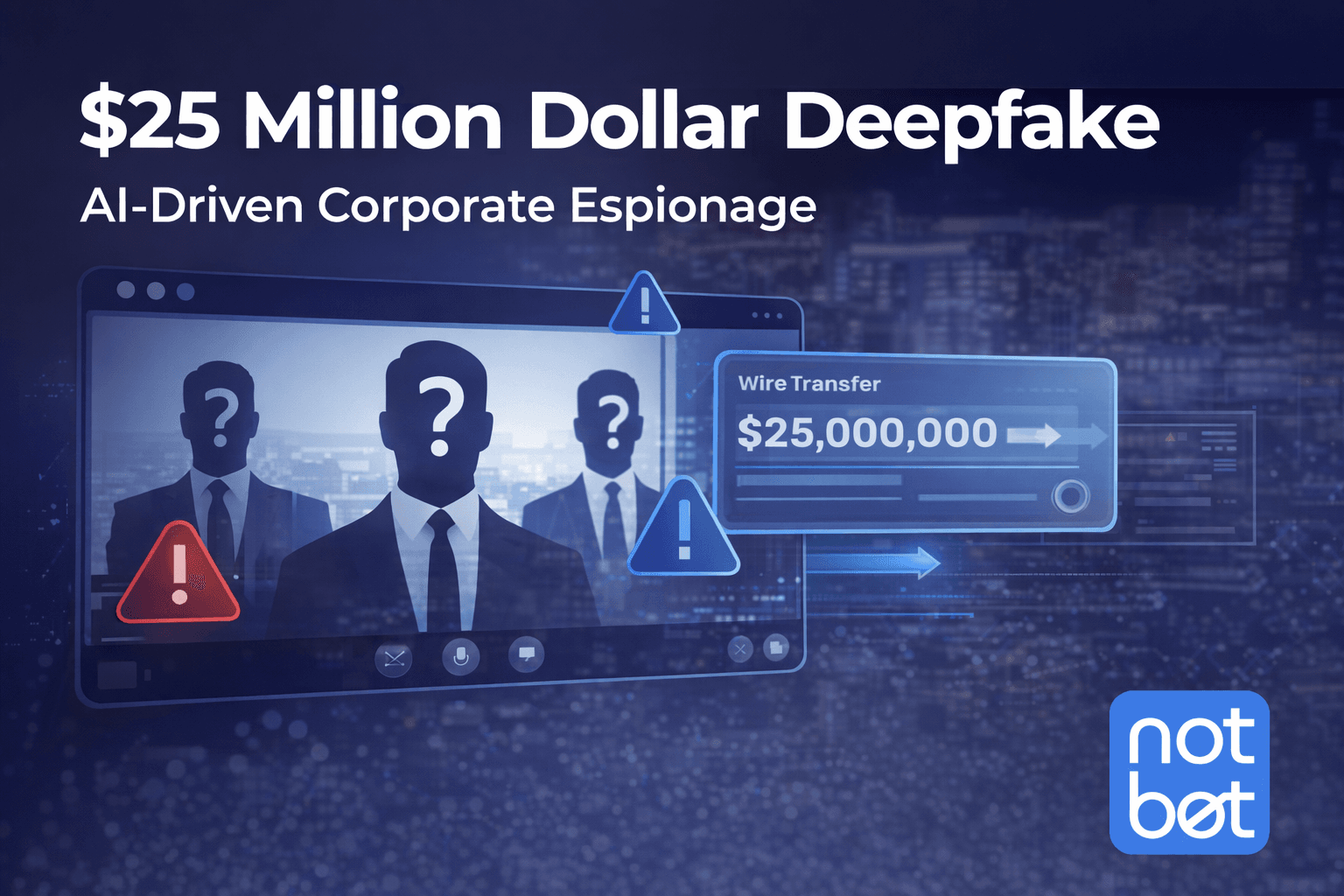
The Core Problem: A recent article by Ken Griggs highlights a chilling shift in financial fraud. In early 2024, a Hong Kong firm lost $25 million after an employee authorized transfers during a video call where every other participant—including the "CFO"—was a high-quality AI deepfake. This isn’t an isolated incident. Losses from AI-driven scams in the US are projected to skyrocket from $12 billion in 2023 to over $40 billion by 2027. Why Banks are Vulnerable: Low Barrier to Entry: Criminals can now use off-the-shelf AI tools to clone voices with just 20 seconds of audio or create realistic videos from social media clips. Remote Work Reliance: The shift to remote banking and work has made institutions heavily dependent on video and phone verification—the exact mediums deepfakes exploit. The Biometric Paradox: Current identity verification methods often require users to upload selfie videos and government IDs. Ironically, this feeds criminals the very biometric data they need to build convincing impostors. The Proposed Solution: The article argues that we can no longer trust our eyes and ears to verify identity. Instead, the financial sector must pivot toward cryptographic signatures and blockchain technology. By using a Public Key Infrastructure (PKI) on a tamper-resistant blockchain, institutions can verify the digital identity behind every transaction using mathematical certainty rather than biometric appearance. This "privacy-first" approach allows for authentication without exposing the personal data that deepfakes rely on. Key Takeaway: As AI fraud evolves, traditional "see it to believe it" verification is obsolete. To protect assets, the financial industry must adopt immutable, cryptographic proof of identity.

Digital Identity Verification: A Critical Defense for Small Businesses in the Age of Deepfakes

Digital Identity Verification: A Critical Defense for Small Businesses in the Age of Deepfakes

Deepfakes: The Critical Threat Small Businesses Can't Ignore Deepfakes have evolved from a novelty into a sophisticated weapon, making small businesses a prime target for AI-driven attacks and scams. These fabricated videos and audio clips pose a severe risk of financial fraud and instant reputational damage. Worse, many traditional verification systems that ask for your government ID or webcam footage are actually counterproductive. They create a data liability risk and provide hackers with the high-quality biometric data they need to create even more convincing deepfakes. The solution is a new, privacy-first defense based on two technologies: Cryptographic Signatures: Allows you to "sign" any digital content with a secret key, proving authenticity without exposing personal data. Blockchain: Acts as a decentralized, tamper-proof ledger to link your public key to your identity, ensuring no one can arbitrarily change or revoke your digital identity. Adopting this combination is essential for small businesses to build consumer trust and protect against the growing threat of AI deception. For a detailed breakdown of how digital identity verification effects businesses read the full article here You will find more information about not.bot signatures here

The Deepfake Target: Why Small Businesses Are the Silent Victims

The Deepfake Target: Why Small Businesses Are the Silent Victims

Unlike large corporations with vast security teams, small businesses are increasingly becoming the silent targets of sophisticated AI fraud. Deepfakes—requiring minimal audio or video to create—pose a critical threat, from impersonating you to authorize wire transfers to spreading fake customer service announcements that instantly damage your brand. The real danger? When attacked, small businesses lack the media platform to publicly debunk these fakes. Furthermore, while traditional online verification systems demand invasive biometric data (like facial scans), storing this sensitive information creates a massive liability risk. Hackers exploit this data to craft more realistic fakes. To survive this digital arms race, the article The New Face of Fraud: How Deepfakes Are Targeting Small Businesses argues for a privacy-first identity solution. By using Cryptographic Signatures and Blockchain for verification, you can prove your digital messages are authentic and protect your business from liability, all without storing or sharing sensitive user data. Learn more about the not.bot products here

Tired of Bots? Not.bot human Verification is Your New Business Advantage

Tired of Bots? Not.bot human Verification is Your New Business Advantage

Our digital lives often feel like the Wild West, crowded with bots, deepfakes, and data harvesters. For small business owners, this creates an existential problem: How do customers know they're interacting with a real human and not an algorithm or a scammer? This article introduces an exciting shift in online security, focusing on human verification rather than just data protection. The key innovation lies in placing the power of identity verification back into the hands of the individual user, prioritizing privacy from the start. Instead of relying on centralized, hackable databases (the way most security works), our not.bot solution authenticates identity using digital autograph signatures (QR/JAB codes) powered by cryptography. This means: You control your data: No copies of personal information are stored by a third party. You prove authorship: You can attach a verifiable signature to any message or post, proving it came directly from you and not a bot or deepfake. Your customer's privacy is protected: Customers can verify their identity without surrendering personal data, mitigating your business's liability risk. This approach flips the script on online trust, empowering your business to build authentic relationships in a world where digital manipulation is rampant. To learn more about this "Silent Guardian" approach, Read the full article on The American Reporter.

Verify Your Digital ID: The AI Privacy Crisis for Home-Based Businesses

Verify Your Digital ID: The AI Privacy Crisis for Home-Based Businesses

As a solo entrepreneur, you rely on AI tools to compete, but this dependence comes with a steep price: an escalating threat to customer privacy. The article Verify Your Digital ID: Why Every Home-Based Business Needs AI Privacy Protection and a Digital Identity Verification Solution argues that many common AI privacy solutions are flawed, often secretly tracking, storing, or selling customer data. This aggressive data collection erodes consumer trust and creates massive data liability for your business. The viable path forward is a privacy-first approach. By leveraging new cryptographic and decentralized verification systems, home-based businesses can instantly prove their authenticity and prevent fraud using secure digital signatures. This innovative technology avoids collecting or storing any sensitive personal information, making it impossible for hackers to steal. Prioritizing ethical data stewardship is the only way to safeguard your future and build lasting customer trust. Learn more about not.bot here